


GALLERY MONTPHOTO 2026
Mammals
Place: Mugello, Toscana (Itàlia)
Description:
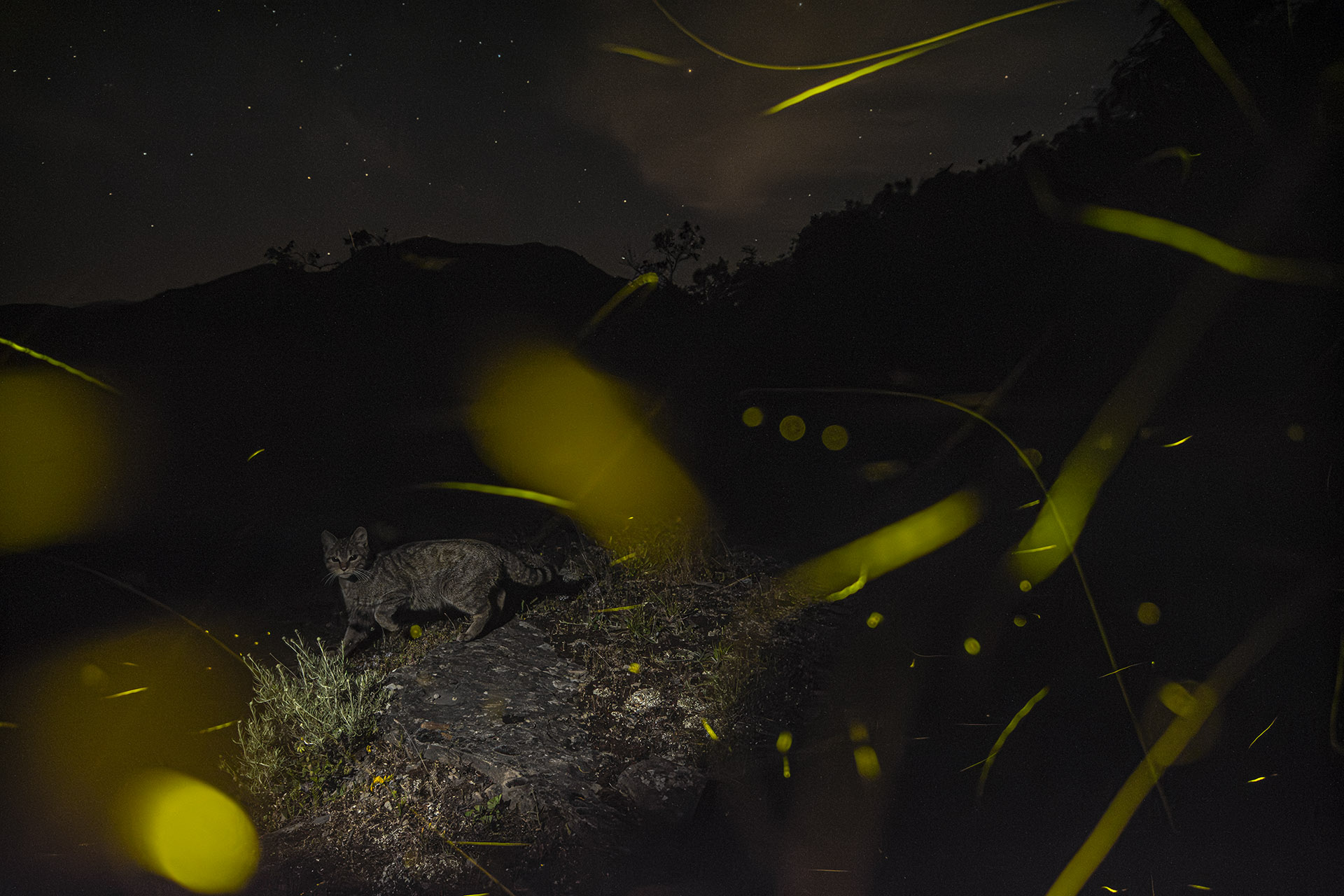
A European wildcat (Felis silvestris) moves cautiously along a mountain trail during a summer night, revealing its presence for a fraction of a second. The animal is embedded within a complex nocturnal scene, where bioluminescent fireflies trace ephemeral trajectories through the air, creating a natural light field that intersect
Lorenzo Shoubridge
Place: Makgadikgadi (Botswana)
Description:
Aardvark (Orycteropus afer) are very rare to see, least of all in the daytime as they forage at night under the cover of darkness to protect against predators. They need to eat 50000 ants or termites a nights, so an unexpected cold snap meant this aardvark needed to extend his feeding time into the sunset hours when he could metabolise. His nose and ears designed to hear out prey underground, a curiosity at sunset.
.jpg)
Laura Dyer
Place: Mongòlia interior
Description:
In early May, the Hulunbuir Grassland blooms with purple Eastern pasqueflower (Pulsatilla cf. patens). During golden hour, a female Corsac Fox (Vulpes corsac) emerged into the honeyed light, her coat glowing like liquid gold. Hidden and patient, I captured her navigating this shimmering tapestry with silent grace.
.jpg)
Xudong Cai
Place: Svalbard (Noruega)
Description:
During a marine expedition around the Svalbard archipelago, we landed at the mouth of the great Hornsund fjord, to the south-west of Spitsbergen, where, upon exploring the surrounding area, we came across a permanent Polish scientific research station. There, I was able to capture this truly curious scene of an Arctic fox (Vulpes lagopus lagopus) peering inside the station.
.jpg)
Pere Soler Isern
Place: Bale Mountains PN (Etiòpia)
Description:
Ethiopian Wolf (Canis simensis) feeding on the nectar of red hot poker flowers (Kniphofia uvaria), a unique behaviour only recently discovered and documented for the first time. In performing this action, the wolves may also serve as pollinators, representing potentially the first known plant-pollinator interaction involving a large carnivore. The Ethiopian wolf is Africa’s most threatened carnivore.
.jpg)
Amit Eshel
Place: Churchill (Canadà)
Description:
I was in Churchill, northeastern Canada, photographing polar bears in October 2024. On this day, signs indicating the arrival of small planes were placed on the runway of the small airport. Soon the Polar bear (Ursus maritimus) came across this sign, from curious, cautious and careful at first. When he finally got his paw into the bucket, he lifted it steadily and looked at me as if to show off: Look, my new toy!
.jpg)
Rongzhi Zhang
Place: Lower Zambezi PN (Zàmbia)
Description:
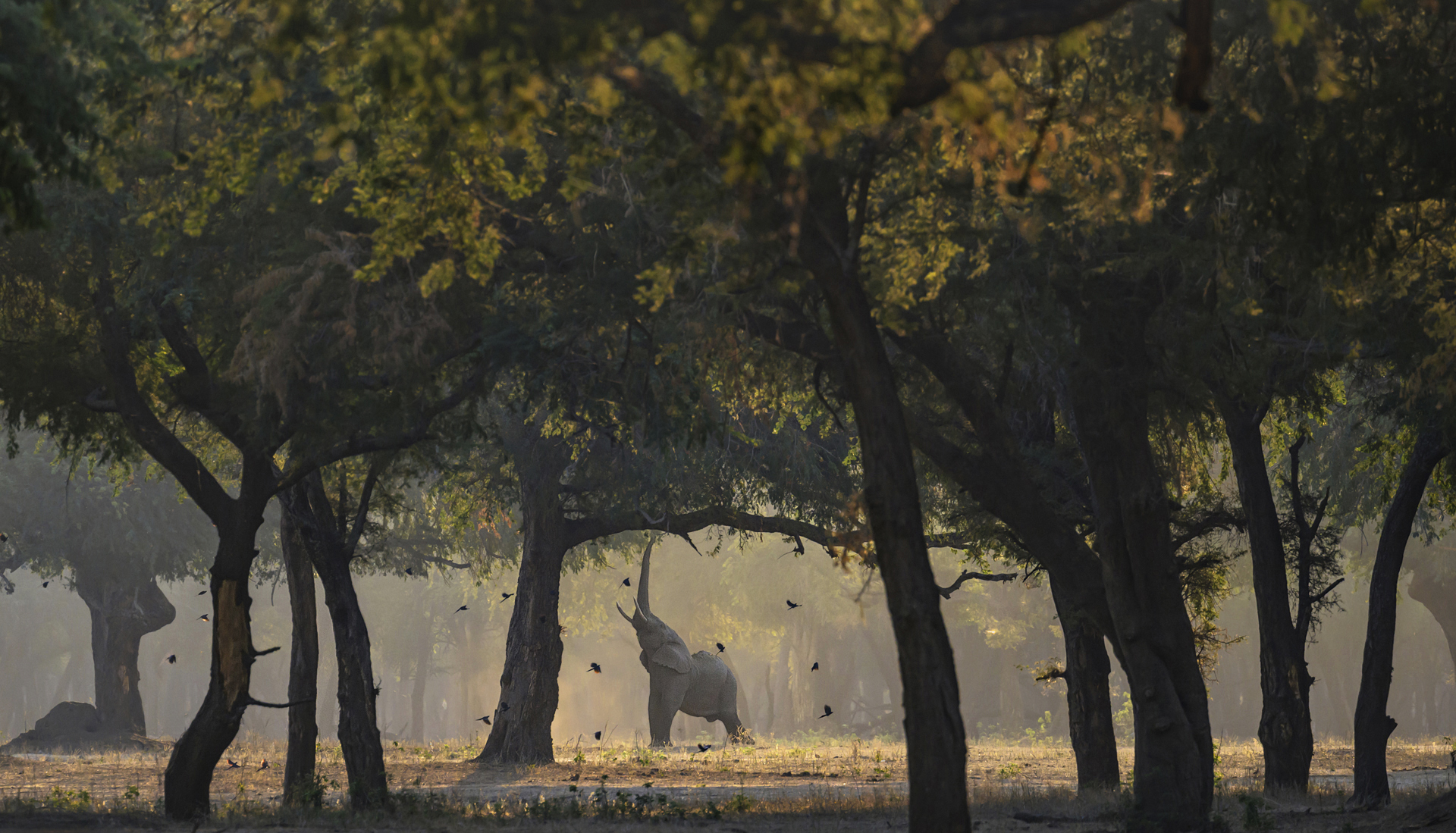
For many years I have been trying to capture the allure, mystery and serenity of a beautiful forest growing on the banks of the Zambezi River. This forest is filled with African savanna elephants (Loxodonta africana), but in order to capture a truly forest scene, I learnt to stand far back and to zoom into windows of the forest. Placing an elephant in one such window, on this particular day, I was very excited when my subject appeared
Greg du Toit






Rules of the web site | Legal advice | Privacy statement | Cookies policy | Change cookies preferences
Administration | Web design: ATMultimedia